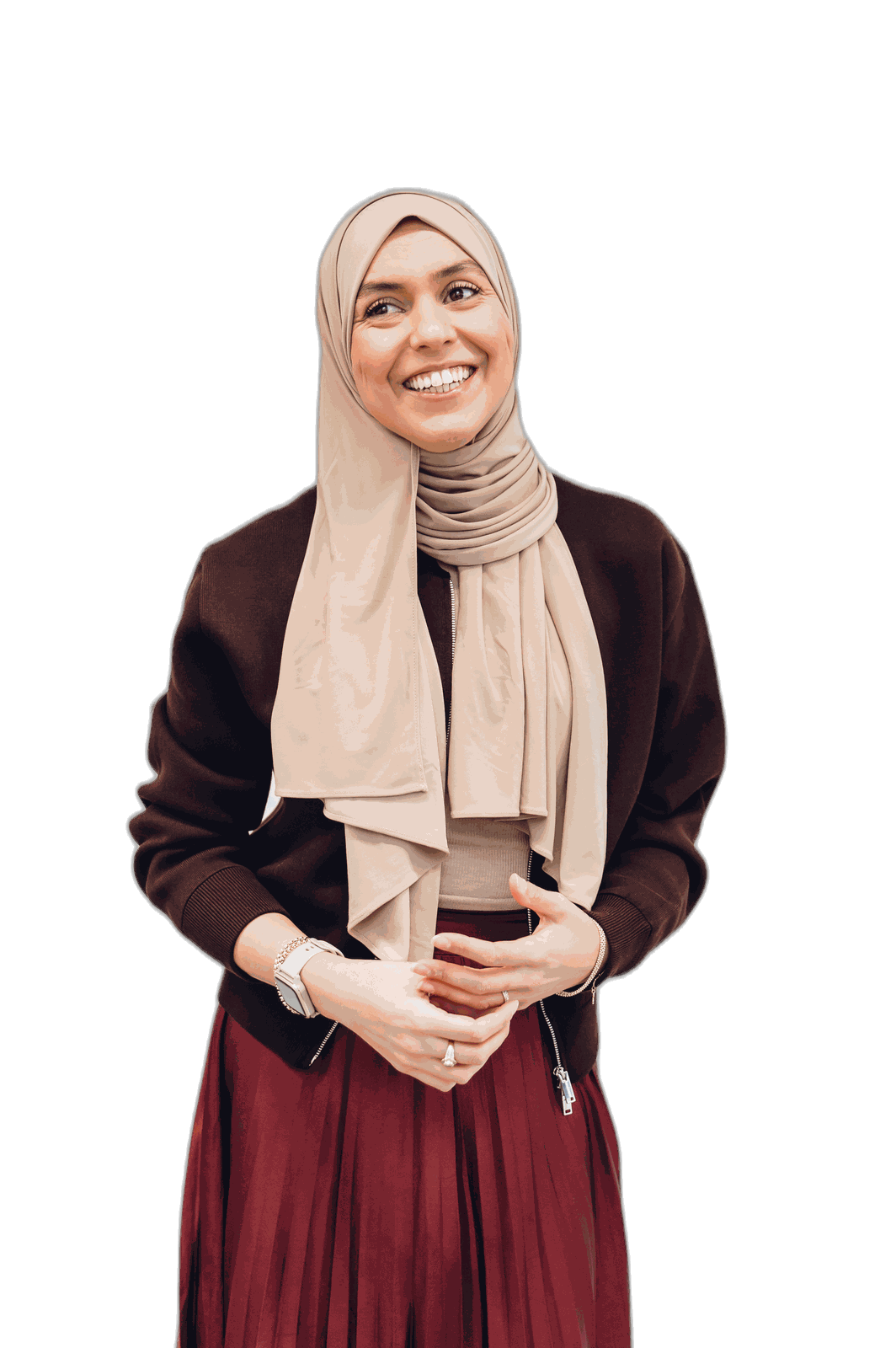
Portret van Sana Sellami, foto door Nadia El Makhfi

Hi, I'm Sana.

Sociologist · Inclusion Strategist · Speaker · Author
A short intro

I spot the rub fast. And I don't leave it unnamed.

For more than ten years I've worked with executives, HR and teams across Belgium and the Netherlands. I like to ask the question that gets skipped — especially when everyone thinks the answer is already clear.

This is what shaped my lens ↓
10+ years experience
Belgium and the Netherlands
Strategy, leadership and culture
Inclusion That Works™
10+ years experience
Belgium and the Netherlands
Strategy, leadership and culture
Inclusion That Works™
10+ years experience
Belgium and the Netherlands
Strategy, leadership and culture
Inclusion That Works™
01Where my work started to shift

For a long time I thought it was about kennis ging.

If people only understood how things worked, they'd act differently of their own accord. I was convinced of that for years.

I could explain something carefully, share research, see everyone agreeing. And still, the next day, the same decisions came back. The same reflexes. The same silences.

Not because people hadn't understood. Knowing what could be better is something else than doing it when the pressure rises, when a conversation gets hard, or when a familiar way of working is up for debate.

That changed my own work. I became less interested in what people can recap after a session. I want to know what they do differently when it actually matters.

Knowing what could be better doesn't change anything yet.

02My way of looking

What my lens brings you.

I rarely look at a single incident on its own. I want to know what sits behind it: what people experience, what choices the organization is making, and why certain patterns keep coming back.

As a sociologist I'm used to digging further. I lay numbers next to lived experience and watch what actually happens in daily practice. The explanation that lands on the table first is often only part of the story.

An incident is often the visible edge of a larger pattern.

Most organizations know where they want to go. It gets harder once that ambition has to land in daily work. What are managers doing differently? What choices does HR make? And who takes responsibility for what?

Only in practice does it become visible what policy is worth.

I listen to what people say, and also to what only surfaces after a meeting. Who holds back? Whose explanation gets accepted quickly? And which topic keeps staying untouched?

What stays unspoken shapes the collaboration just as much.

I don't assume a training is the answer. Sometimes it is. Sometimes you first need a sharper look, a decision made, or a conversation that's been put off for too long.

I advise what fits — not what's easiest to sell.

03The official version

Doctor in socio-economic sciences. More than ten years of experience in research, strategy, trainings and keynotes. Guest lecturer, board member and author of Inclusion (Doesn't) Work.

Working across Belgium and the Netherlands · Dutch and English

Organizations I've worked with
04Persoonlijk

I never learned to avoid hard conversations.

I grew up in the Netherlands, in a place where debate was ordinary. The day after Pim Fortuyn was killed, we were already discussing it at school. I don't know if every conversation back then was handled well, but I learned something: hard topics don't disappear just because you avoid them.

I carry that into my work. I ask the question nobody's put on the table yet, listen to what people would rather phrase carefully, and try to make room for a more honest conversation. Not to make it uncomfortable — because little changes as long as the most important thing stays unspoken.

Hard topics don't disappear because you avoid them.

05And outside work

And when I'm not working?

Chances are I'm on the road. To a football field, hockey practice, basketball game or Arabic class — one of the four kids'. So there's still a paper calendar on our fridge. Not fancy. Not digital. The only system everyone actually looks at.

Somewhere between work and family life, I make space to run. I've run several marathons and I still train. Not because I enjoy every kilometer — absolutely not — but because long distances force me to respect my own pace. You can't give everything at once and still expect to finish.

Home is busy, not chaotic. We plan a lot, divide what needs dividing, and know that sometimes one of us carries more than the other. Een perfecte 50/50-verdeling zegt mij weinig. Knowing you can lean on each other matters even more.

What stays with you
Four kids, my own company and a few marathons later, mostly I know this: a lot is possible — but rarely all at once.
Sana Sellami
06Press and conversations

In the media.

Articles and conversations about inclusion, leadership, work and organizational culture.

Denk je dat mijn blik iets kan betekenen voor jullie organisatie?

Tell me what you're sitting with. In a first call we look at what's going on and whether I'm the right person to help.

Book a first call→ Not ready for a call yet? See my method first →
Book a call