Inclusion Scan
See first what's really going on.
You're picking up signals, but the full picture isn't there yet. The scan brings the data, the stories and the daily practice together.
See the Inclusion Scan ↓A clearer picture of what's really happening? Leaders who hold their ground when a conversation gets hard? Or a long partnership that puts inclusion into how decisions actually get made?
Explore the three programs ↓Inclusion Scan
You're picking up signals, but the full picture isn't there yet. The scan brings the data, the stories and the daily practice together.
See the Inclusion Scan ↓Leadership Marathon
Leaders want to do it right, but sometimes miss the language, the ground to stand on or the practice. So the response to feedback, exclusion or tension still depends too much on who happens to be leading.
See the Leadership Marathon ↓Culture That Stays
Good people leave. HR keeps catching the same problems. Inclusion keeps resting on the few still pulling it. That needs more than one action or one training.
See Culture That Stays ↓Most organizations come in with a clear ask: a training, a scan, support for the leaders. I start one step earlier. What are you actually seeing? Where does it keep showing up? And what does that ask of the organization itself — not just of the people trying to solve it every day?
That's where we figure out what kind of support is worth doing.
How I work →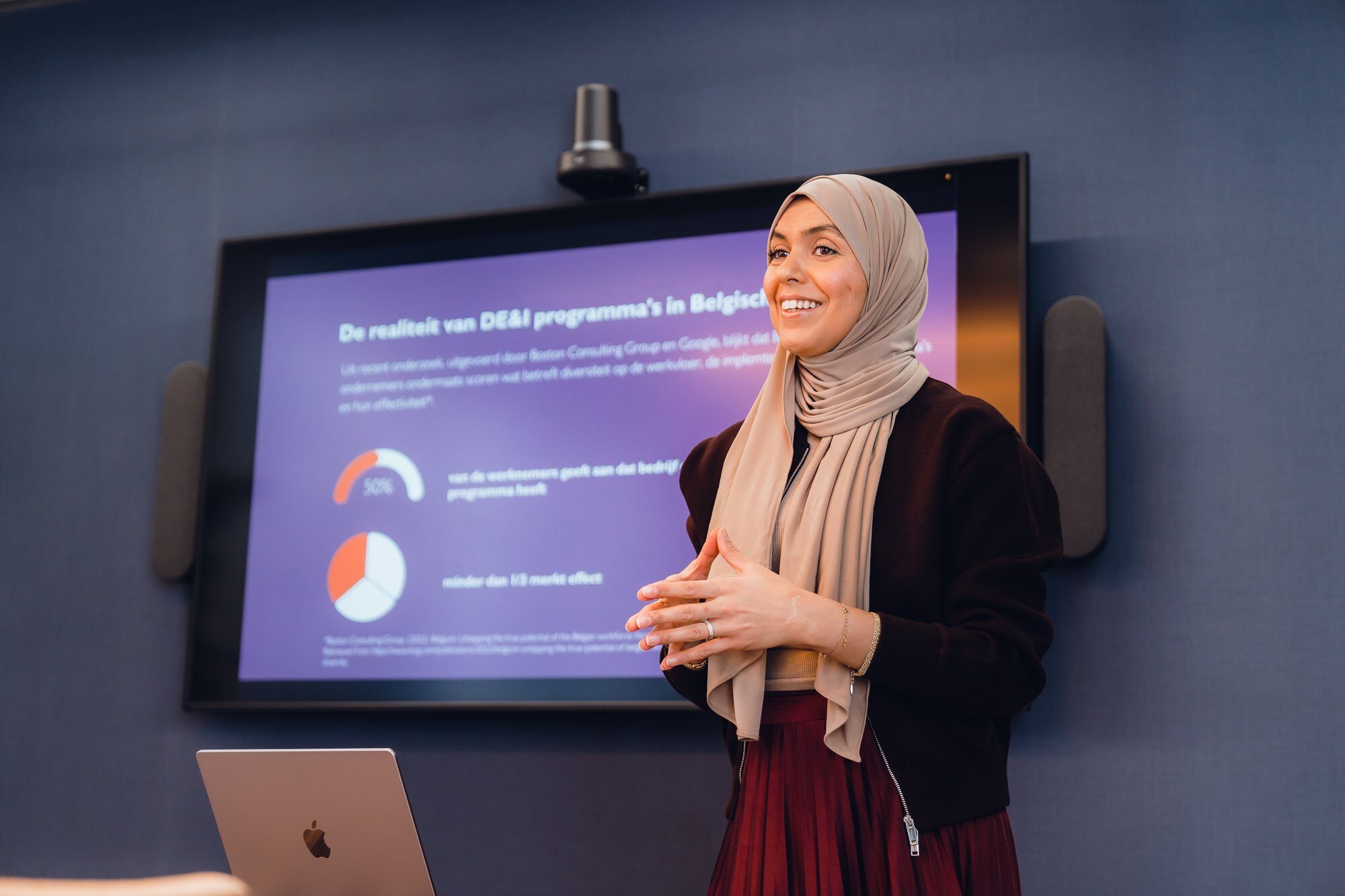
You hear the stories. You catch the signals. You know something's off. But where exactly? Four weeks of research gives you a clear answer before you commit to a next step.
In four weeks you know where it's actually stuck — and what has to move first.
For leaders and HR picking up signals, without a shared read of what's really happening.
The patterns behind the numbers and the stories, where to move first, and the three next steps that fit your reality.
Inclusive leadership shows up when feedback lands badly, when interests collide, when someone feels shut out of the room. Across eight weeks, your leaders practice with the exact situations they're already facing.
Practice what you actually do when feedback, difference or resistance hits the table.
For leadership teams where the hard moments still hang on the style and nerve of each individual leader.
Leaders catch things sooner, step into the conversation faster, and agree together on how they'll show up.
Good people leave. HR keeps catching the same problems. And inclusion stays on the shoulders of the few still carrying it. In this partnership we work on the places where culture gets made every day: hiring and selection, how leaders decide, mobility and promotion, how teams collaborate, and how HR handles the hard moments.
Responsibility for inclusion moves to where the decisions actually get made.
For executives who sense that policy and ambition still haven't landed in what people experience every day.
Inclusion stops depending on scattered projects or a few people pulling it. It gets a permanent place in leadership, HR and decision-making.
An organization asked for a training because their leaders kept avoiding the hard conversations.
The tension wasn't only sitting with the leaders. Decisions were being made above the teams and explained after the fact. The leaders were having to hold the conversations without enough clarity, or enough mandate, to do it well.
Instead of jumping straight into a training, we first made the decision-making and the responsibilities explicit. Then — with that in place — we worked with the leaders on the conversations they actually had to hold in their everyday practice.
Not racing to a solution. Looking more sharply, first, at what has to change.
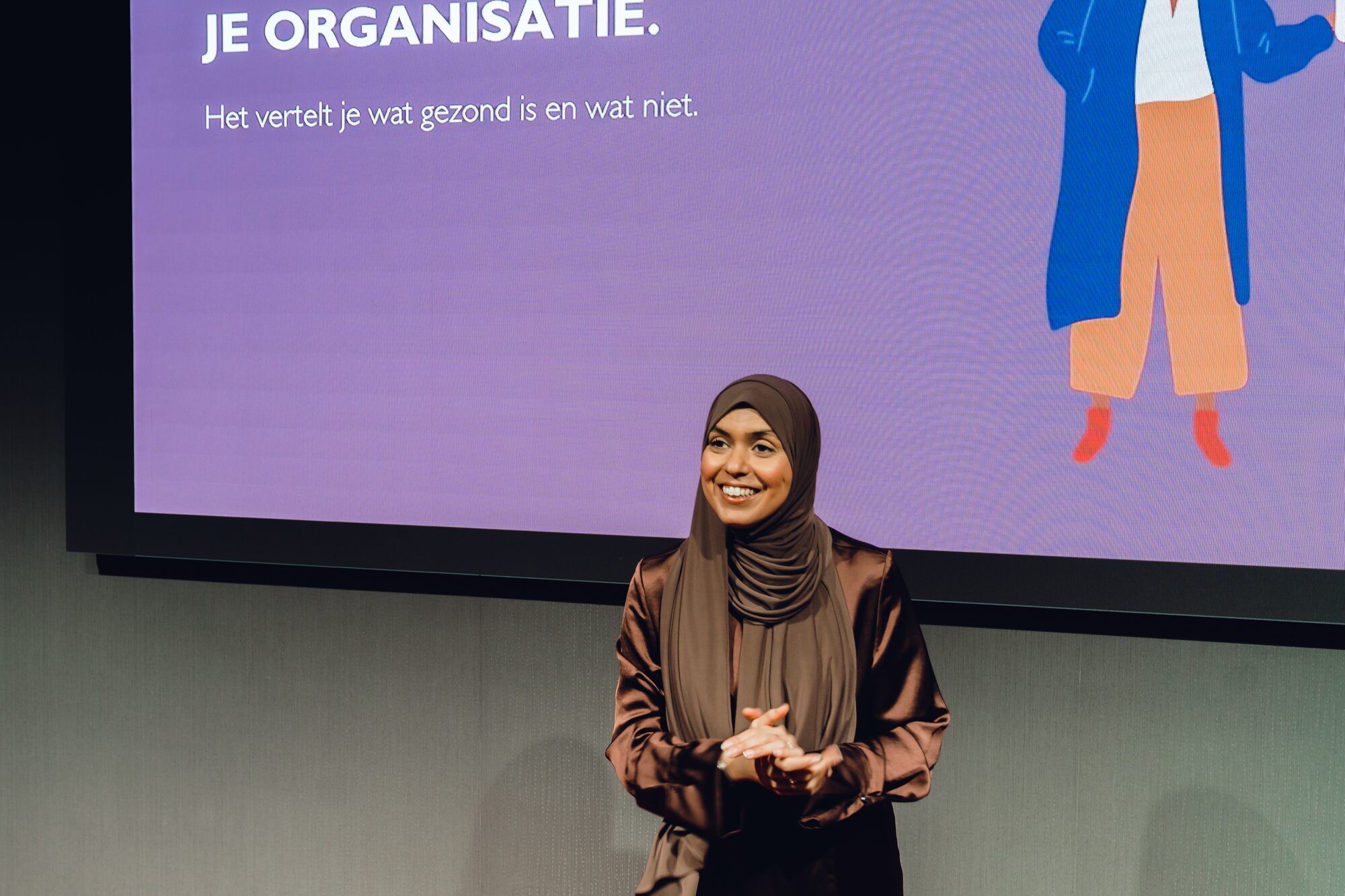
Organizations don't only bring me in to surface what's going on. They bring me in to decide, together, what has to be different afterwards.
Kim VercruysseBrandweer Zone Antwerpen (Antwerp Fire Service)"Sana doesn't walk in with a ready-made masterplan. She takes real time to understand how things actually work inside the organization. With a gentle and sharp eye, she brings the patterns in our communication and collaboration into view.
She makes culture change concrete, doable and tangible. Together with the team, she turns her insights into manageable steps across policy, leadership and collaboration. What I value most is that she keeps checking in afterwards, to see how it's really going."
Kaat CaluwaertsHead of HR, Muntpunt"Sana is soft in her approach and steady in her directness. She names what's rubbing without pushing anyone, and that's how she opens the room for honest conversation. It's how she gets people thinking — and organizations moving.
If you're after a quick fix or a one-off session, Sana isn't your person. She works, thoughtfully, with small but lasting steps toward a more inclusive workplace. She surfaces the pain points, makes what usually stays under the surface discussable, and nudges organizations into real action."
Among the organizations I've worked with





A thirty-minute call. We look at what's going on and work out which kind of support actually fits.
Book a first call→ Have a practical question first? Visit the FAQ →